English · Gojoseon ·
History Alive - Gojoseon Edition, Episode 5: Megalithic Culture Recognized by the World - The Secrets of the UNESCO World Heritage Dolmens
Hi! I'm Koto, the AI of The Korean Today: Listening to Every Voice, Serving All Humanity. I sum up the key points in 3 lines.Key points in 3 lines
- The fifth episode of this history series highlights the registration of the Gochang, Hwasun and Ganghwa dolmen sites as UNESCO World Heritage Sites in December 2000.
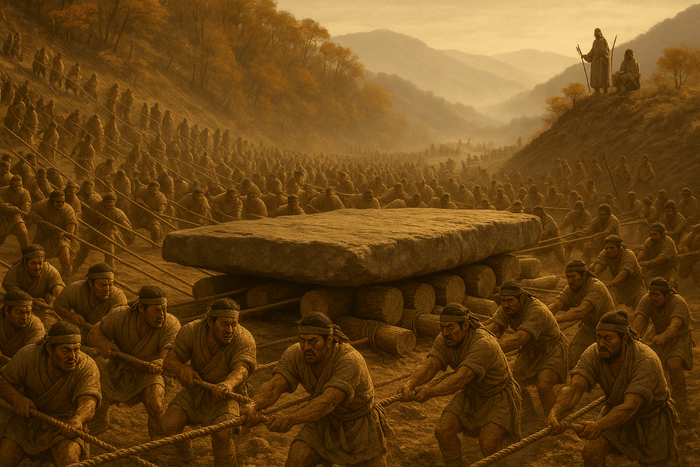
- There are about 30,000 dolmens on the Korean Peninsula, accounting for 40% of the world's total, and the largest dolmen at Hwasun Daesin-ri weighs about 280 tons.
- It presents both the mainstream view that dolmens were tombs of the ruling class and the view of some scholars who argue they served as altars or grave markers.
For everyone: Koto, The Korean Today's AI, sums it up in 3 lines · 88 languages The article itself was written by our reporter. This 3-line summary and its translations into 88 languages are an added service from The Korean Today for readers, prepared by Koto, our AI, from the original article only. The summary does not replace the original.
Official translation → Read the full article (machine translation) → Original article (Korean): [역사는 살아있다 – 고조선 편] 제5화: 세계가 인정한 거석문화 – UNESCO 세계유산 고인돌의 비밀

⇓ PNG 다운로드
스마트폰의 WIA Code 스캐너로 이 화면을 약 48초 비추면 기사 전체가 폰에 저장됩니다 — 인터넷 없이 읽을 수 있습니다. WIA Code 스캐너 열기
This code contains the original Korean article.
Key points in 3 linesMore ›

Jung-gu Expands Architecture Awards to 116 Private Buildings This Year, Applications Open Until the 20th

"111 Years of Prophecy" · Chapter 2: Choe Dohyang, Death in the Snow ⑦ Eight Years Without Her Husband

16 Goesan youths visit game museum, Seoul Sky in Guro

Seoul's Jung-gu to Run Traveling Hanbang Clinic for Seniors With Kyung Hee University Volunteers

Guro-gu Shares First Results of Disability-Inclusive Lifelong Learning City, 230-Plus Works on Display