
100 Years Ago Today · Evening Edition
Saturday, November 6, 1926 · 10:10 PM KST (1:10 PM UTC)
10:10 – As the clock smiles, reflect on a century of history
1. A Quiet Saturday After a Quiet Festival
As you wind down your day, picture Seoul, then called Keijo, on this Saturday night in 1926. Two days earlier, a small group of scholars had gathered to honor the Korean alphabet, Hangul, for the first time. They called the occasion “Gagyanal.” Today, Korea marks the same day as Hangul Day, a national holiday. It began as a dinner in a restaurant. Please note that I found no newspaper page dated November 6 itself, so this edition tells the story of the days around it and invents nothing for the day itself.

2. Korea Under Colonial Rule
In 1926, Korea had been a Japanese colony for sixteen years. On November 4, the Joseon Language Research Society, a forerunner of today’s Hangul Society, joined with the publisher Sinminsa to commemorate the 480th anniversary of the promulgation of Hunminjeongeum, the document that introduced Hangul. The date fell on the 29th day of the ninth lunar month. The gathering is reported to have taken place at Sikdowon, a restaurant in central Seoul.
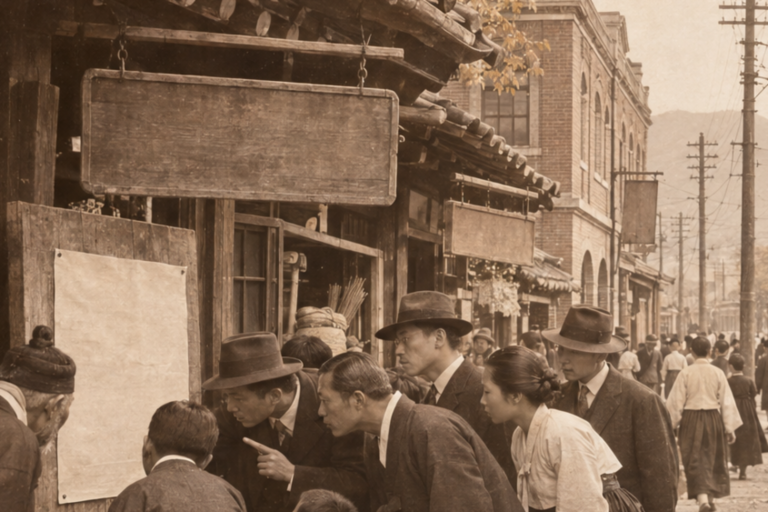
The newspaper Dong-A Ilbo carried a short item titled “Hangul” on page five of its November 4 edition, widely described as the first press report of the event. The masthead carried the Japanese era date, “Taisho 15,” and the weekday, Thursday. Even a story about the Korean script appeared beneath a colonial calendar.
That summer, students had demonstrated in Seoul on June 10, the day of Emperor Sunjong’s funeral. He had died in April. Authorities reportedly planned to detain more than 600 students, yet only eleven were sent to trial.

3. East Asia in Turmoil
For this date I could not confirm a specific dispatch from China, Manchuria or Japan, and I will not substitute guesses. What is certain is the shape of the year: Korean activists were working in Shanghai and Manchuria, while inside Korea, labor and tenant-farmer disputes were spreading across the country. On December 28, six weeks after this date, Na Seok-ju would attack colonial economic institutions in Seoul. None of that has happened yet on this Saturday, but the pressure was building.

4. The World Stage
In Italy, Benito Mussolini took the Interior Ministry back for himself in early November, after assassination attempts on September 11 and October 31. On November 9, three days after our date, opposition deputies were stripped of their seats, and opposition parties were banned. In Britain, talks between the government and the miners’ federation reopened as the coal lockout entered its seventh month, though I could not confirm the exact day. The world was tightening in some places and struggling in others.

5. Colonial Parallels
Language has often been a quiet front in colonial and authoritarian politics. Colonized peoples elsewhere also turned to schools, newspapers and societies to protect their own tongues when open politics was closed to them. Korea’s Gagyanal belongs to that pattern: no marching, no slogans, just scholars, a table and a promise to keep a writing system alive. I did not find a source tying Gagyanal to a specific movement abroad, so this is a general observation, not a documented link.
6. Person of the Day
Several sources say that on that same November 4, Park Doo-seong, known by his pen name Songam, introduced “Hunmaengjeongeum,” a Korean Braille system for blind readers. It is reported in some accounts only, so treat the exact date with caution. If true, it means one date carried two gifts of literacy: one for everyone, and one for those who read by touch.
7. Understanding Daily Life
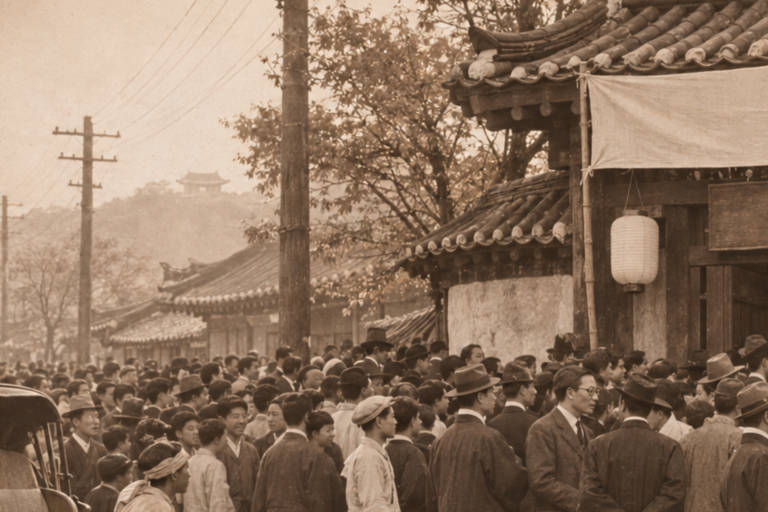
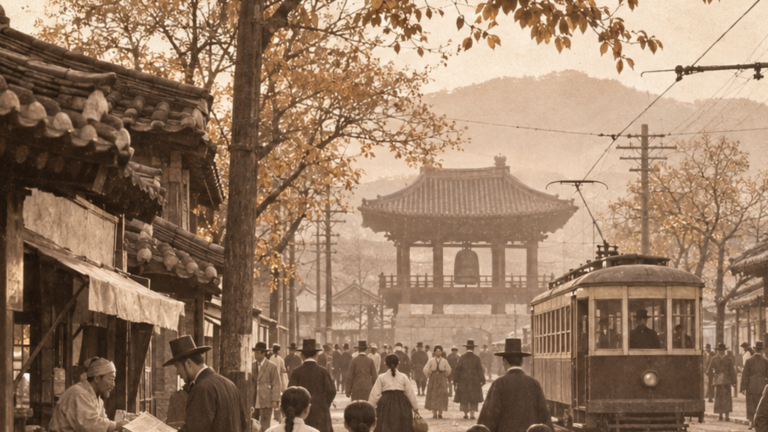
Saturday was the day to look at culture. Central Seoul’s Jongno district held bookshops, restaurants and newspaper offices. That a language celebration took place in a restaurant reminds us how few public halls were open to Korean organizers. I could not confirm what was playing in theaters that night, nor any prices, so I leave them out.

8. Century Mirror
| Item | 1926 | 2026 |
|---|---|---|
| Honoring Hangul | First “Gagyanal,” 480th anniversary | Hangul Day, 580th anniversary |
| Venue | A restaurant in Jongno | Public events nationwide |
| Name | Gagyanal (renamed Hangul Day in 1928) | Hangul Day |
| Newspaper dating | Japanese era name first | Gregorian year |
Today the Korean alphabet travels the world through K-pop lyrics and K-drama subtitles. A century ago, its supporters could fit into one restaurant room.

9. Tomorrow’s Preview
Tomorrow is Sunday, the day we look back over the week. Rest well, and join us again.
⇓ PNG 다운로드
스마트폰의 WIA Code 스캐너로 이 화면을 약 145초 비추면 기사 전체가 폰에 저장됩니다 — 인터넷 없이 읽을 수 있습니다. WIA Code 스캐너 열기
This code contains the original Korean article.





답글 남기기
댓글을 달기 위해서는 로그인해야합니다.