
100 Years Ago Today · Evening Edition
Tuesday, November 2, 1926 · Gyeongseong (Seoul)
10:10 PM KST (1:10 PM UTC) – As the clock smiles, reflect on a century of history
Hook Opening
Tonight, in 1926, Seoul was two days away from a small banquet that would one day become a national holiday. Nobody in the dining hall at Sikdowon yet knew that the “Gagyanal,” a celebration of the Korean alphabet, would grow into Hangul Day.
A note on sourcing before we begin. I was not able to locate the original Korean newspapers of November 2, 1926, and I found no confirmed record of the weather or prices that day. What follows is limited to what the sources support.

Korea Under Colonial Rule
Korea in 1926 had been a Japanese colony for sixteen years. The year had been heavy. Emperor Sunjong, the last monarch, died on April 25, and his funeral in June sparked the June 10 Movement, with protests centered on Seoul and student strikes across the country.
On November 4, the Joseon Language Society (Joseon-eo Yeonguhoe, the forerunner of today’s Hangeul Society) held the first “Gagyanal” in Jongno, Seoul, at a venue called Sikdowon. Accounts say it was organized with the publisher Sinminsa. The occasion marked 480 years since the promulgation of Hunminjeongeum, the original name of the Korean alphabet.
The date came from the Annals of King Sejong, which place the promulgation on the 29th day of the ninth lunar month. Converted to the solar calendar, that was November 4. The name “Gagyanal” comes from “ga-gya-geo-gyeo,” the opening of the traditional syllable chart Koreans recited when learning to read.
It is reasonable to imagine organizers busy with preparations on November 2, but I found no record describing those preparations, so that is an inference, not a documented fact.
East Asia in Turmoil
Across the region, 1926 was a year of upheaval. China was in the midst of the Northern Expedition, as the Nationalist forces pushed north to challenge regional warlords, and Japan was approaching the end of the Taisho era, with the Showa era beginning in December. I did not find confirmed events specific to November 2 in either country, so I will not invent any.
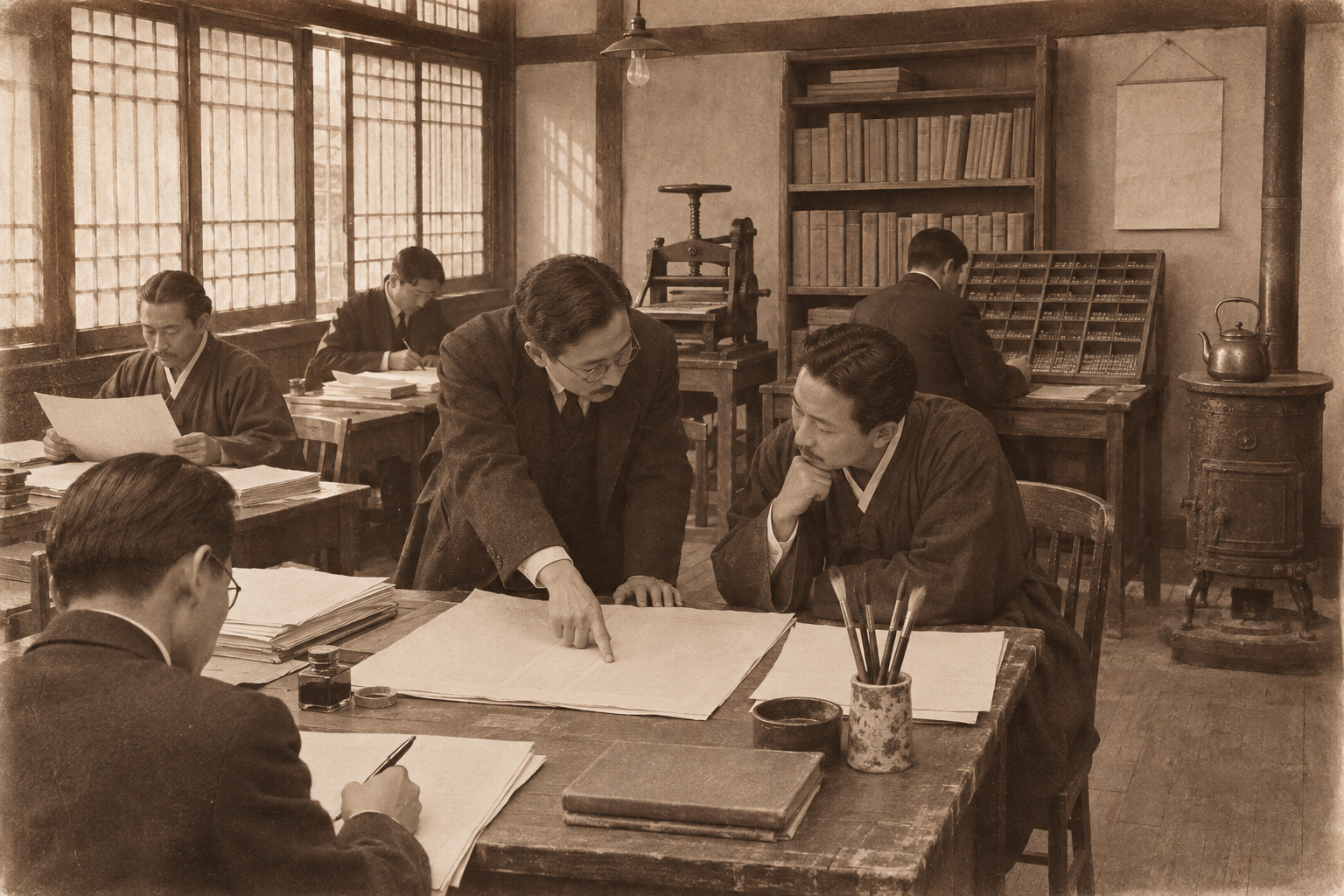
What mattered for Koreans was the press. The Dong-A Ilbo and the Chosun Ilbo led the privately owned Korean-language papers. A third was on the way: Yi Sang-hyeop took over the rights to the defunct Sidae Ilbo (founded by Choe Nam-seon in 1924) on September 18, then relaunched it as the Jungoe Ilbo on November 15, 1926, at Myeongchi-jeong 82, in today’s Myeongdong.
In a colony where speech and print were closely watched, a new newspaper and a new holiday for the alphabet were two ways of saying the same thing: this language is ours.

The World Stage
November 2, 1926 was Election Day in the United States, the midterm contest in the middle of President Calvin Coolidge’s term, with all 435 House seats at stake. In New York, Democrat Robert F. Wagner defeated incumbent Republican Senator James W. Wadsworth Jr., and Democrat Al Smith won the governorship over Ogden Mills.
In London, the Imperial Conference had been meeting since October 19 and would run until November 23. Its committee, chaired by Lord Balfour, produced a report adopted on November 19 declaring Britain and the Dominions “autonomous Communities within the British Empire, equal in status.” Parliament made that principle law in the Statute of Westminster in 1931.
The Americans were choosing their own leaders at the ballot box, and Britain was redefining equality inside its empire. Korea, meanwhile, had neither.

Colonial Parallels
The Balfour language of equality applied to the white-settler Dominions and the Irish Free State, while India, a colony of the same empire, was not treated as equal in the same way. The pattern of promising self-rule to some subjects and withholding it from others was a defining feature of imperial politics in the 1920s.
Korea shared one thing with such colonies: language became a form of resistance. Where political organizing was restricted, cultural work such as dictionaries, grammar societies and alphabet celebrations carried national feeling. I am drawing this comparison from general history, not from a source specific to November 2.
Person of the Day
No single individual is documented for this exact date, so rather than invent one, consider two figures connected to the week. Yi Sang-hyeop, who acquired the Sidae Ilbo and turned it into the Jungoe Ilbo, was a veteran journalist, and the money for his venture came from the investor Baek Yeon-gi, according to Korean reference works. Choe Nam-seon, who had founded the earlier paper in 1924, is the other. Neither is recorded doing anything specific on November 2.
Understanding Daily Life
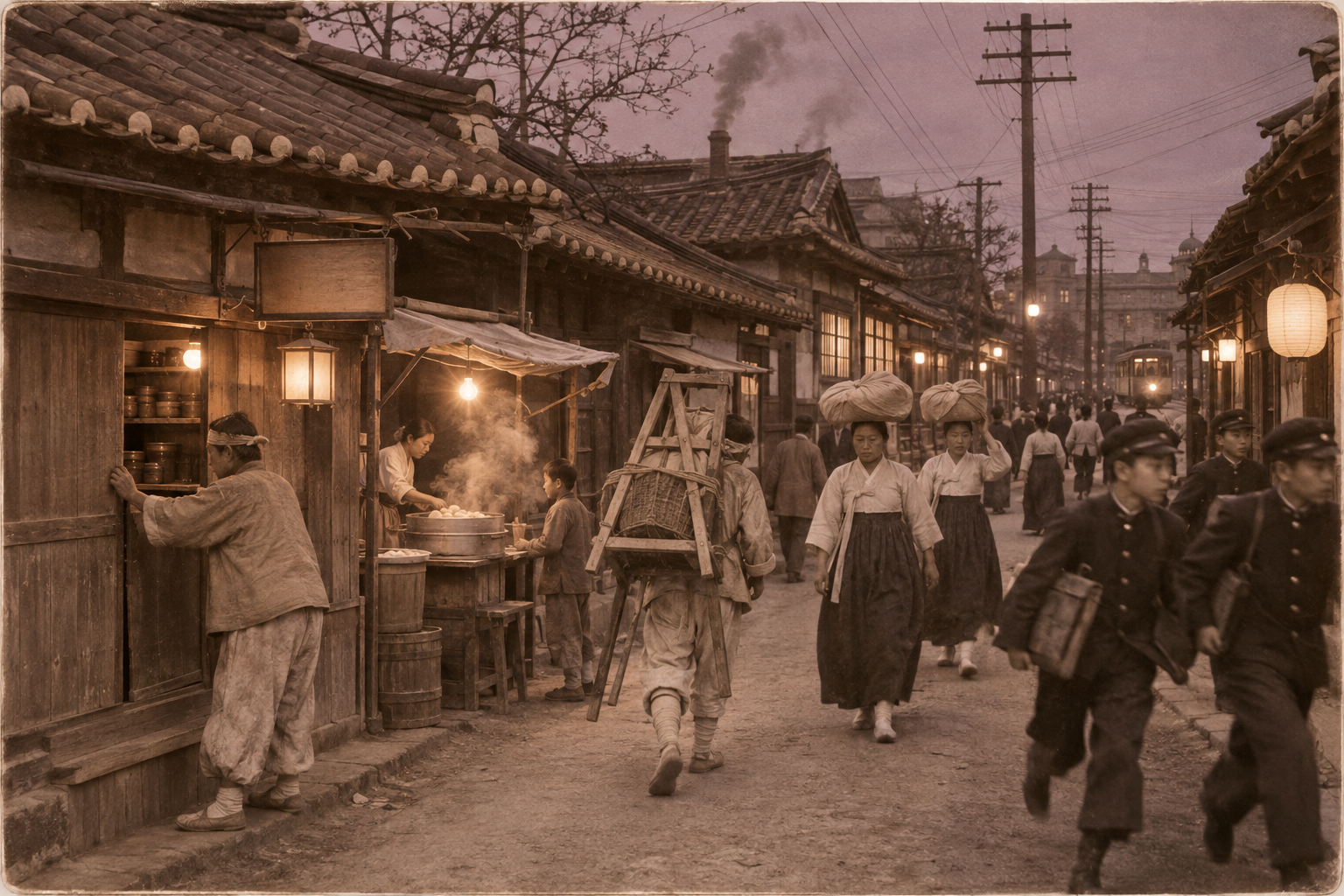
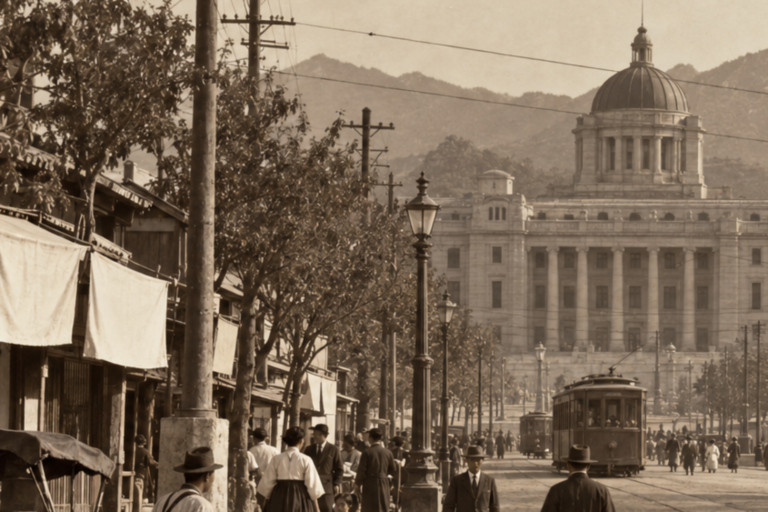
I could not find a record of what Seoulites ate, paid or wore on this particular day, so I will describe only structure. Jongno was the commercial and cultural spine of the Korean part of the city, and Sikdowon, the banquet venue for the first Gagyanal, stood there. Newspaper offices, bookshops and schools were close together, so writers, teachers and linguists met often.
It was a Tuesday, and Tuesdays in this series belong to law and culture. The law of the colony limited what Koreans could say and where they could gather. Culture found gaps in those limits, and a language society hosting a dinner was one of them.
Century Mirror
| Topic | 1926 | 2026 |
|---|---|---|
| Alphabet holiday | “Gagyanal,” Nov. 4 (lunar 9/29 converted) | Hangul Day, Oct. 9 |
| Organizer | Private scholars’ society | National commemoration |
| Press | Dong-A, Chosun, soon Jungoe | Print, web and video |
The holiday was renamed Hangul Day in 1928. After the 1940 discovery of the original Hunminjeongeum Haerye manuscript, the date moved to October 9. Today the same alphabet sits at the center of K-pop lyrics, K-drama subtitles and a global wave of learners, and it began as a dinner organized by a handful of scholars in a colony.

Tomorrow’s Preview
Tomorrow is Wednesday, November 3, 1926, one day before the first Gagyanal. Join us again tomorrow at 10:10 PM KST.
🕙 THE KOREAN TODAY
Sources: Encyclopedia of Korean Culture entries on the Jungoe Ilbo and Sidae Ilbo; Bizhankook and Seoul Media Hub reporting on Gagyanal; records of the 1926 US elections; records of the 1926 Imperial Conference. Original November 2 newspapers, weather and prices were not confirmed.




답글 남기기
댓글을 달기 위해서는 로그인해야합니다.