

Tuesday, November 23, 1926
Hook Opening – A Quiet Tuesday
As you wind down your day, picture a street in Seoul exactly one hundred years ago tonight. A cinema marquee glows. People who have little say in how their country is run have found a story that speaks for them. A full day’s Korean newspapers for November 23, 1926 could not be located for this edition, and neither could a confirmed weather report or price list. So we will not invent them. What follows is what the record does confirm about the weeks around this Tuesday, a day of law, order and culture rather than headlines.

Korea Under Colonial Rule – The Line Outside the Theater
On October 1, 1926, the silent film Arirang opened at the Danseongsa theater on Jongno street in Seoul. Na Un-gyu wrote it, directed it and starred in it. Accounts say lines formed from the first day, stretching as far as the YMCA building on Jongno, and that the film later did well in theaters across the country. About 800 extras appeared in it. Danseongsa was then managed by Park Seung-pil.
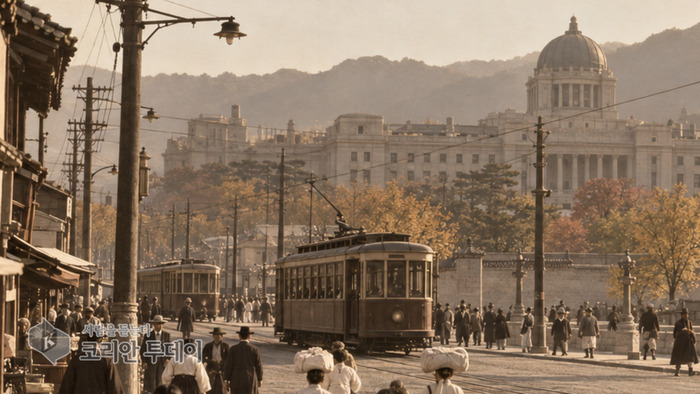
Opening day carried a political edge. Na planned to march near Gwanghwamun with a band, singing Arirang and handing out about 10,000 leaflets. Japanese authorities blocked it and seized the flyers. On that very day the colonial Government-General held the completion ceremony for its enormous new headquarters at Gwanghwamun. One building announced power. Across the city, a song was quietly claiming something of its own.
We have not confirmed what played on November 23, nor attendance on that night. We do not claim that Arirang was still on the bill.

East Asia in Turmoil – Shanghai and the Exile Government
In Shanghai, the Provisional Government of the Republic of Korea struggled to hold itself together. Yi Sang-ryong had resigned in February after failing to form a cabinet. Hong Jin was elected premier by the exile legislature on July 7, formed a government on August 30 and announced policy on September 27. His term is recorded as ending on December 14, when Kim Ku succeeded him. Nothing from Shanghai dated November 23 was found, but the day sits inside Hong Jin’s tenure.
In the spring, the death of Sunjong, the last Korean monarch, had left a heavy mood. Sources differ on whether he died on April 25 or 26. Elsewhere in the region, the Kuomintang’s Northern Expedition, launched on July 9, was still moving north through China. In Japan, Emperor Taishō’s long illness was worsening. He died on December 25, about a month later.

The World Stage – London Redraws an Empire
The World 100 Years Ago: all days ›
In London, the Imperial Conference that began on October 19 was ending, on November 22 or 23 depending on the source. Its landmark product was the Balfour Declaration of 1926, which described Britain and the self-governing Dominions as equal in status, autonomous communities within the British Empire. Sources give the adoption date as November 15 or November 19. The Singapore Free Press reported on its front page of November 23 that British press opinion on the decisions was divided. The same paper said that conductor Sir Thomas Beecham had told interviewers he was leaving England for America and would conduct the Philadelphia Orchestra.
That same day, the war film What Price Glory? opened in the United States, and a vote among American railway conductors showed a large majority favoring a strike.

Colonial Parallels – Equal Status for Some
The Balfour language applied to Britain’s white-settler Dominions: Canada, Australia, New Zealand, South Africa, the Irish Free State and Newfoundland. India, still under direct British rule, was not part of that equality. A century ago, Korea and India both lived under rule that others called progress, while the empires’ own conferences debated status among themselves. This is a parallel drawn from the confirmed outline of the conference, not a claim about any Korean reaction on this date, which we did not find.
Person of the Day – Na Un-gyu
Na Un-gyu stands for the day. A filmmaker who wrote, directed and acted in one project, he tried to promote it with a song and was stopped by police. We know nothing confirmed of his movements on November 23. What the record preserves is the October 1 episode, and it is enough to show a young artist testing how far a popular story could travel under censorship.

Understanding Daily Life – Two Faces of One City
We have no confirmed hour-by-hour account of ordinary Seoulites on this date, so we offer only what is established. The city carried two images at once. At Gwanghwamun stood a new colonial headquarters. On Jongno, people queued for a film made by Koreans. Evening lamp-light at the theaters is plausible, but not documented for this day.
Century Mirror
| Topic | 1926 | 2026 |
|---|---|---|
| Promoting a film | Street march blocked, leaflets seized | Global streaming and social media |
| Film sound | Silent, with narrator and band | Full sound, color and 3D |
| Korean stories abroad | Local screens only | K-drama and K-pop worldwide |
A hundred years later, Arirang is still sung, and the centennial of the film has drawn fresh attention in the Korean press. The song outlived the building built to overshadow it.

Tomorrow’s Preview
Tomorrow is Wednesday, November 24: a day for students and young people. Join us again at 10:10 PM KST. Until then, good night.
Sources: Korean press and National Archives material on Arirang and the Government-General building; Provisional Government records; Wikipedia and UK National Archives on the 1926 Imperial Conference; Singapore Free Press, November 23, 1926. Korean newspaper originals for this date were not located.



 Leave a comment


 See the whole “100 Years Ago Today” series ›
Leave a Reply
Please log in to comment. Log in