
Dear readers, if you were to write the heart of the Republic of Korea in a single character, what would it be?
I would write jeong (情). The greeting that asks whether you have eaten; the heart that insists on pressing something into the hand of a person who is leaving. That is the feeling we call jeong.
Growing up, this is what I was taught. A small country in the East, a country of people who liked to wear white. A history of guarding their own land rather than coveting the land of others.
But when I turned the pages of that history again, one at a time, there were wounds in many places that I had not known of. There were things that did not return to where they belong, and people we sent off and were never able to welcome back.
Ten Fingers
This is what mothers used to say: bite any of your ten fingers, and there is not one that does not hurt. The fingers stand for all of one’s children — the child at your side, the child who went far away, the child from whom word has stopped — and each hurts the same when bitten.
The Republic of Korea has such fingers, too.
Dokdo, the island in the middle of the East Sea. A classroom in Longjing (Yongjeong), across the Tumen (Duman) River. The Gwanggaeto Stele, standing inside glass walls across the Yalu (Amnok) River. The Koryo-saram (ethnic Koreans of the former Soviet Union), put on trains in the autumn of 1937 and sent to Central Asia. The Koreans of Sakhalin, who could not board a ship home even after liberation. People born and raised in Japan whose documents still carry, in the nationality column, the two characters for “Chōsen” (Joseon). Those who were taken. Those who left for the plantations of Hawaii and Mexico in search of a way to live. Our books that sit in the libraries of other countries. And the young people who crossed the sea for a country whose name they had not even known.
I decided to call these ten the Ten Fingers.
At first I meant to call them “the sore fingers.” But the name troubled me. If some fingers are the sore ones, it follows that others are the less sore ones. Writing about Dokdo first does not mean the pain of Sakhalin is any less. Giving forced mobilization a large place does not make the lives of those who went to the plantations of Mexico any smaller. The moment we line them up by which hurts more, the people standing at the end of the line are forgotten once again. To say that there is no finger that does not hurt when bitten is to say that we will not pick out a finger that hurts more.
The tenth finger is gratitude. This series calls the countries that sent troops, medical teams and supplies to this land during the Korean War “The Hands That Helped.” A hand that counts only what it has lost easily becomes a fist. Only when we also count what we received does the hand open.
To be frank, the ten lines above took me a long time to write. Of all the many articles and series we have published, these lines took unusually long. It was because I myself did not fully know what story lay inside each line. So I rewrote this piece as I read through the manuscripts one by one.
If you, like me, paused before these ten lines, that is where this series starts. What happened, and what became of those people. I will post the answers to those questions in “Ten Fingers,” one piece at a time, at 11:17 a.m. every day. I will write them so that they are not hard to read.
Why Now
Because the people who remember are leaving.
As of September 30 this year, according to the Ministry of Gender Equality and Family Affairs, five surviving victims of the Japanese military “comfort women” system are eligible for government support. The time in which we can hear from those who lived through it is growing short. After that, the records remain. If we do not read the records correctly now, the next generation will inherit rumor.
There is another reason. This is an age in which a plausible sentence is the cheapest thing there is. Headlines that stir anger and figures without sources are produced and spread in an instant. The more painful the history, the sooner such sentences attach themselves to it. And a single line without basis causes the whole of that pain to be doubted.
The last reason is ourselves. Perhaps the whole world is passing through a hard time, and cracks have opened among us as well. We split over politics and region, and it has become hard to sit down across from someone who thinks differently. Even painful history is read by taking sides.
Still, I remember the winter of 1998. When the nation’s finances collapsed, there were people who came out carrying the gold they had kept in their wardrobes. I cannot forget that will to find a way together in a hard time.
That is why certain words weigh on me all the more. Live decently and you lose out. You have to be shrewd to get by. I hope these words do not become advice taken for granted even by children. That writing things down honestly is not a loss, that calling a kindness a kindness and a hurt a hurt is not foolish — I want to show this not in words but in records.
So this series goes slowly. I will open the documents and write only as much as has been confirmed.

Six Promises to Our Readers
One. We put evidence before argument. We will show you the years, the documents, the figures and the places. The judgment is the reader’s.
Two. We put a label on every number. We state who counted it, when, and by what standard. The “7.8 million” of forced mobilization is recorded as 7,804,376 in the report of a government commission, and it is a figure that includes the same person counted more than once. Written that way, the number holds up for a long time.
Three. What we could not confirm, we say we could not confirm. We place that line at the end of every piece. A blank is not something to be ashamed of; it is a space to be filled in later.
Four. Where there is disagreement, we say there is disagreement. Where scholars’ interpretations diverge, we will set down the grounds and the limits of each interpretation together.
Five. We neither enlarge the harm nor diminish it. If we are wrong, we will correct it and keep a record of the correction.
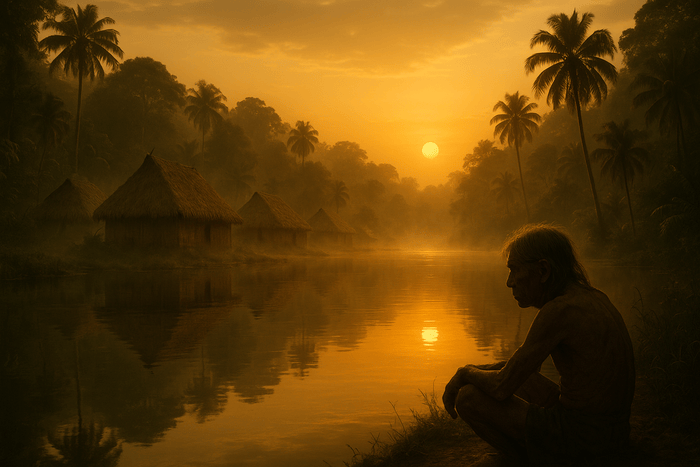
Six. We do not hide anything. AI is used to write the drafts. We open the originals and check quotations, figures and dates against them line by line. The pictures between sections are illustrations drawn by AI, and they are labeled as such. We do not create or alter historical photographs.

Go and See
Every piece in this series ends with “Getting There.”
I believe that taking the boat once and seeing it is better than saying a hundred times that Dokdo is our land. The UN Memorial Cemetery in Busan, Gohyang Village in Ansan, the Museum of Korea Emigration History in Incheon, the memorial museum at Utoro in Kyoto. History is not only inside books; it is in places you can reach by buying a ticket.
I must confess that I, who write “go and see,” have not yet been to Dokdo myself. So I intend to go myself. Late as it is, on some clear day when I have not stayed up all night, I will board the boat to Ulleungdo. When I come back, I will write only as much as I saw.
Nor will I write only painful stories. The Oegyujanggak Uigwe (royal protocols of the Joseon dynasty), carried away in 1866, came back to this land after 145 years. It was because there were people who did not forget.
But the remains of the patriot Ahn Jung-geun, who died for his country on March 26, 1910, we have not yet been able to bring home. In Hyochang Park in Seoul there is an empty grave that waits for him.
What has come back and what still remains — we will count them one by one.
The Road Ahead
From tomorrow, Tuesday, November 17, through Monday, February 22 next year, we will run seventy pieces over 98 days, one every weekday.
| Day | Every other week, from the first week | Every other week, from the second week |
|---|---|---|
| Tue | Dokdo and the East Sea | What Has Not Come Home |
| Wed | Sites of Goguryeo and Balhae | Gando and the Korean Chinese |
| Thu | Koryo-saram | Sakhalin Koreans |
| Fri | Koreans in Japan | Those Who Were Taken |
| Mon | Those Who Went Far | The Hands That Helped — the countries that took part in the Korean War |
The ten fingers open once every two weeks, seven times each. In a week with an anniversary, the day is changed to match the date. After that, the story of the division and the records of the participating countries, one country at a time, are waiting.
We will not hurry. A slot whose checking is not finished will be left empty, and we will not move another piece forward to fill it.
Those Who Walk Together
The Korean Today is an internet newspaper that opened on November 11, 2013. Branch heads across the country have recorded the present day of their regions, each from their own home district, and its articles can now be read in 88 languages. If the place that all ten fingers reach is the palm, that palm is the region where we live now. For the Koryo-saram neighbors who live beside us today, the elders who returned from Sakhalin, and the parks where the names of war veterans are engraved are themselves history.
This is not a road walked alone. The branch heads in every part of the Republic of Korea, the branch heads who will join us in and outside the country, correspondents and reporters, Kreators and promotional ambassadors, and the readers who read us — these are fingers we open together. Wherever in the world they live, the door of this newspaper is open to anyone who wishes to tell the story of their own place. If you send me the stories I have missed, I will find the materials, check them and record them.
Let me add just one more thing about myself. I began learning to code at an age people call late. It was the bravado of someone who had always boasted that age is only a number. With what I learned I set up servers and built this newspaper’s house with my own hands. Beyond that, following my own sense of what the problems are, I have built, one by one, projects that try to solve with AI the problems people face. And now I open this series. For as long as my strength lasts, I want to record even one thing more. That one wish has brought me this far.
I hope to see this small undertaking through to completion, as I always have. On the day the seventieth piece runs, I will take this piece out and read it again.
If there is no finger that does not hurt when bitten, then there should be no finger we leave unopened.
Tomorrow is November 17, Patriots and Martyrs Day. On this day in 1905, Imperial Japan forced the Eulsa Treaty on the Korean Empire and took away its diplomatic rights. In 1939, the Provisional Government of the Republic of Korea designated this day as the day to honor the patriots and martyrs.
Tomorrow at 11:17 a.m., we will first observe one minute of silence in honor of those patriots and martyrs, and at 11:18 we open the first finger. It is Dokdo.
November 16, 2026, one day before Patriots and Martyrs Day
Respectfully, Yeon Sam Heum, Publisher of The Korean Today
The Korean Today “Ten Fingers” Editorial Committee
AI was used to prepare the draft. Quotations, figures and dates were checked against the originals, and the illustrations were drawn by AI.

⇓ PNG 다운로드
스마트폰의 WIA Code 스캐너로 이 화면을 약 34초 비추면 기사 전체가 폰에 저장됩니다 — 인터넷 없이 읽을 수 있습니다. WIA Code 스캐너 열기
This code contains the original Korean article.

 Leave a comment


Leave a Reply
Please log in to comment. Log in